Harold Shipman
English doctor and serial killer convicted of murdering 15 patients.

Elisa.rolle · CC BY-SA 4.0
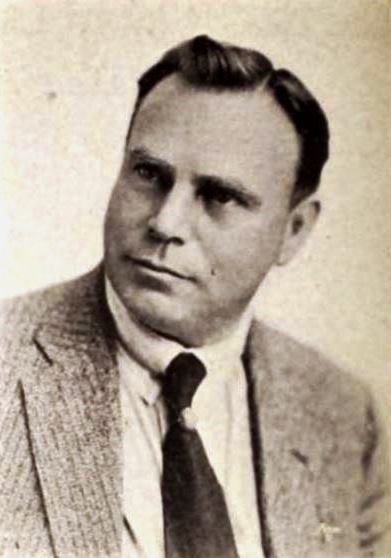
Harold Frederick Shipman, known to acquaintances as Fred Shipman, was an English doctor in general practice and serial killer. He is considered one of the most prolific serial killers in modern history, with an estimated 250 victims over roughly 30 years.
- born
- 14 January 1946
- field
- General practice medicine
- nationality
- English
- known_for
- Serial killer convicted of murdering 15 patients; estimated 250 victims
Lore & Background
Harold Frederick Shipman was born on 14 January 1946 on the Bestwood Estate, a council estate in Nottingham, the second of three children. His father was a lorry driver, his mother a homemaker, and the family were devout Methodists. Shipman was particularly close to his mother, who died of lung cancer when he was 17; her death involved morphine administered by a doctor, a method similar to Shipman's later modus operandi. Shipman studied medicine at Leeds School of Medicine, University of Leeds, graduating in 1970. Shipman began his career at Pontefract General Infirmary and in 1974 took his first position as a GP at the Abraham Ormerod Medical Centre in Todmorden. He worked as a GP at Donneybrook Medical Centre in Hyde, Greater Manchester, in 1977, and established his own surgery in 1993. After the investigation, Shipman killed three more people.
Reader's Guide
Harold Shipman's case is significant for its scale and the profound breach of trust it represents. The Shipman Inquiry, a two-year investigation chaired by Dame Janet Smith, examined all deaths certified by Shipman and revealed he targeted vulnerable elderly people, killing them with fatal doses of drugs or by prescribing abnormal amounts. His case has been compared to that of doctor John Bodkin Adams, and some nurses, such as Beverley Allitt and Lucy Letby, have also been convicted of murdering patients. The case led to reforms in death certification and monitoring of general practitioners, highlighting the need for oversight to prevent similar abuses of medical authority.
Did You Know?
- Shipman was known to acquaintances as Fred Shipman.
- His last victim was Kathleen Grundy, a former mayoress of Hyde, whose forged will led to his arrest.
Posthumous Disposal
The physical remains of Dr Harold Shipman, identified in the record as a British serial killer, met a fate reserved for a small and deeply reviled group in history: cremation followed by the secret scattering of his ashes in an anonymous, undisclosed location. This protocol was applied to him in precisely the same manner as it was to notorious Nazi war criminals, including Adolf Eichmann, Hermann Göring, Heinrich Himmler, Fritz Sauckel, and Julius Streicher. The deliberate choice to disperse ashes rather than inter them in a marked plot serves a purpose that goes well beyond logistical convenience. By eliminating any fixed physical location, the practice removes all possibility that a grave site could later be visited, studied, or venerated. For Shipman, whose posthumous treatment placed him in the same category as fellow British serial killers Myra Hindley and Fred West, the absence of a permanent resting place ensures that no future visitor can stand at a headstone and identify the exact spot where he lies. The anonymity of the scattering site means that even the precise geography of his final rest remains unknown to the public at large.
Company of the Most Reviled
In the taxonomy of posthumous treatment, Dr Harold Shipman occupies a particular tier reserved for those deemed beyond the threshold of commemoration. His remains were handled identically to those of fellow British serial killers Myra Hindley and Fred West, and the same protocol was extended to a roster of Nazi war criminals spanning Adolf Eichmann, Hermann Göring, Heinrich Himmler, Fritz Sauckel, and Julius Streicher. This grouping is not accidental; it reflects a shared judgment that these individuals, regardless of the era or nation in which they operated, warranted no physical memorial whatsoever. The practice of cremating and secretly scattering ashes distinguishes itself from older methods of disgrace, such as burying executed criminals in deliberately unmarked plots or using numbered but otherwise featureless markers in the inmate cemeteries of eighteenth- and nineteenth-century prisons and mental asylums. Where those earlier approaches at least preserved a fixed geographic location, however humble, the modern method of secret ash dispersal goes further still, erasing even the trace of a site. Shipman's inclusion in this narrow list of the most infamous figures underscores the severity with which his actions were regarded by those who determined his posthumous fate.
The Intent Behind Erasure
A deliberately unmarked grave or, in Shipman's case, the complete absence of any grave at all, carries a specific symbolic weight. The underlying intention behind such treatment is one of disdain and contempt, a suggestion that the individual in question is not worthy of commemoration or respect and should be completely ignored and forgotten. A grave monument or headstone is traditionally a sign of respect or fondness, erected with the intention of commemorating and remembering a person; to deny that monument is to deny the person a place in collective memory. For Dr Harold Shipman, the decision to cremate his remains and secretly scatter the ashes in some anonymous place went one step beyond even the old practice of burying executed criminals in unmarked plots as an added degree of disgrace. The cremation and secret scattering carries the additional effect of removing all possibility of there being a grave to visit in the future. No cenotaph, no numbered marker, no whitewashed tomb—there is simply nothing left to find, to photograph, or to stand before. The erasure is total and intentional.
A Modern Evolution of Posthumous Disgrace
The treatment of Dr Harold Shipman's remains represents the latest iteration in a long historical practice of denying the dead a dignified resting place. Unmarked graves have long been used to bury executed criminals as an added degree of disgrace, and in the eighteenth and nineteenth centuries, prisons and mental asylums employed numbered but otherwise featureless markers in their inmate cemeteries, allowing for record-keeping and visitations while minimizing the shame of a family name on permanent display in a disreputable context. Plot E at the Oise-Aisne American Cemetery, consisting entirely of soldiers executed for rape and or murder, stands as a rare twentieth-century example of this policy persisting. More recently, however, the practice has evolved: rather than leaving a body in an unmarked plot, authorities now cremate and secretly scatter the ashes of notorious criminals in some anonymous place. This is the fate that befell Shipman, alongside Myra Hindley, Fred West, and the named Nazi war criminals. The shift from a hidden body to scattered, unlocatable ashes represents a more thorough severing of the dead from any physical geography, ensuring that no site—marked or unmarked—ever exists to anchor memory or curiosity.
Gallery
Frequently Asked Questions
Who is Harold Shipman?
Harold Frederick Shipman was an English general practitioner who became one of the most prolific serial killers in modern history. He operated under his medical license for roughly three decades before being exposed and convicted.
Why is Harold Shipman considered so significant in criminal history?
Because he exploited the trust inherent in the doctor-patient relationship to commit an estimated 250 murders over three decades, he is regarded as one of the most prolific and undetected serial killers in modern British history.
More in Notorious_Criminals_And_Outlaws 1-24
Elsewhere in the Notorious_Criminals_And_Outlaws universe
Spotted an error? Know more?
This is a living reference — every entry is fact-audited, and reader corrections feed straight into our audit queue. Suggest an edit · See this site's audit record